
More people entering retirement
The number of people entering retirement in 2025 was 926,000, which is around 11,200 less than in 2024. The decline in the number of new pension recipients was largely driven by a 5.8 per cent decline in the number of regular old-age pension recipients (minus 22,000 cases) to around 356,000. One of the main reasons for this is the incremental increase of the pension eligibility age. Whilst the statutory pension age for those born in 1958 increased by only one month last year, it has now risen by two months for those born in 1959, who became eligible for a pension in 2025. From a statistical perspective, this additional month means that fewer people reach pensionable age during the calendar year. The number of new standard old-age pension recipients also declined because many insured members had already opted to retire early in previous years. Pensions for persons with exceptionally long contribution histories accounted for 28.3 per cent of all new retirement pensions awarded in 2025, making this once again the most frequently claimed type of early old-age pension. An increasing number of the baby boomer generation are currently reaching retirement age. This means a higher number of retirement pensions for people with a severe disability and for people with long contribution histories in 2025 compared to 2024.
| Retirement entrants by pension type | 2025 Number | 2024 Number | Change % |
|---|---|---|---|
| Total | 1.497.777 | 1.510.993 | -0,9 |
| Reduced earning capacity pensions | 175.978 | 171.732 | 2,5 |
| Total old-age pensions* | 925.865 | 937.107 | -1,2 |
| of which old-age pensions | |||
| ... for severely disabled persons | 68.999 | 64.879 | 6,4 |
| ... for insured persons with a long-term insurance record | 238.028 | 225.120 | 5,7 |
| ... for insured persons with an exceptionally long-term insurance | 262.361 | 268.751 | -2,4 |
| ... as regular old-age pension | 356.388 | 378.243 | -5,8 |
| Survivors’ pensions | 395.934 | 402.154 | -1,5 |
| * Includes three less frequently occurring pension types: long-term mineworkers’ pensions, unemployment/partial early retirement pensions and pensions for women. | |||
“The pension adjustment of more than four per cent on 1 July 2025 further increases the purchasing power of pensions.”
Chair of the Federal Board of Deutsche Rentenversicherung Bund
Reduced earning capacity pensions are still rising
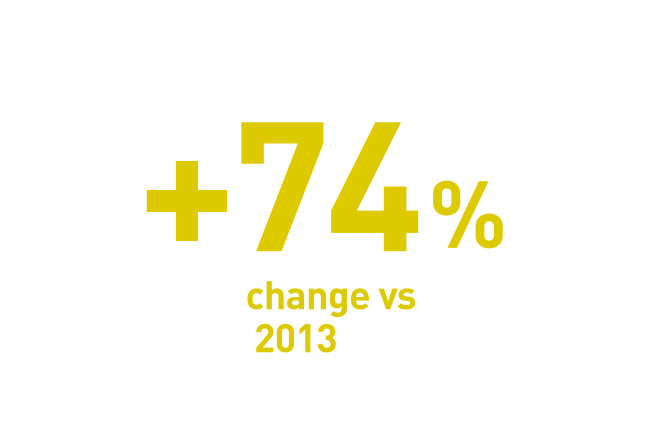
The average amount of reduced earning capacity pension increased to around 1,067 euros for people entering retirement in 2025. In 2024 it was around 1,041 euros. In 2013 the average amount of reduced earning capacity pension was 613 euros, which means a total increase of 454 euros or more than 74 per cent. Among other things, this can be attributed to benefit improvements in the years 2014, 2017 and 2018, as well as the significant extension of the non-contributory supplementary period and the higher retirement age.
Higher retirement age
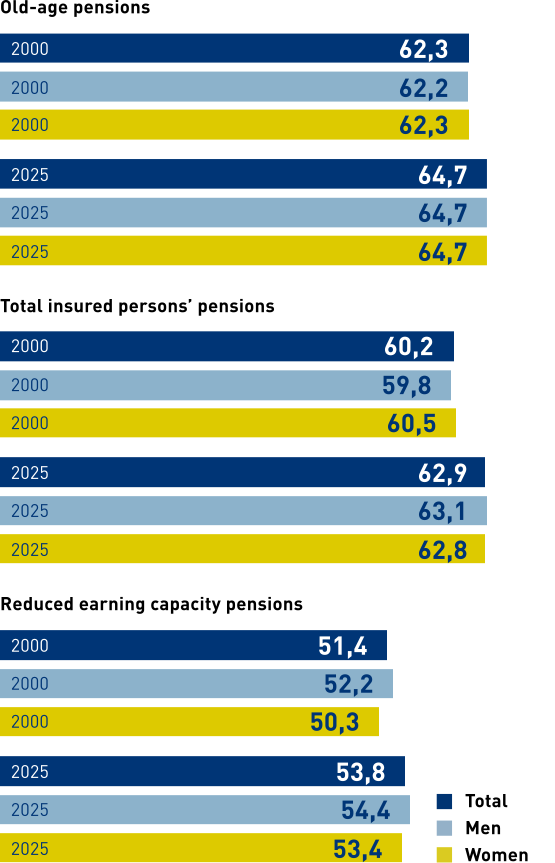
In recent years the average age at which old-age pensions have been claimed for the first time has increased significantly. The average age of 62.3 in 2000 had risen to 64.7 in 2025, even when a differentiation is made between men and women. The main reasons why people are taking retirement later are the introduction of a higher statutory retirement age and the phase-out of two types of early old-age pensions. In the past, these early old-age pension types, such as the old-age pension for women, the unemployment pension and the partial early retirement pension could be claimed at the age of 60 under some circumstances. In addition to that, the pension eligibility age in 2025 for those born in 1959 was already 66.
Increase in pension benefit rates for pensions already awarded
On average, the payout rates for pensions already awarded were 3.8 per cent higher in 2025 than in the previous year. The reason for this increase is the pension adjustment of 3.74 per cent as of 1 July 2025. The increase in reduced earning capacity pensions is disproportionately high. From December 2025 onwards, the flat-rate supplements of 4.5 per cent and 7.5 per cent under the Act to Improve the Status of Reduced Earning Capacity Pensions have been paid together with the current pension to recipients whose pensions commenced between 2001 and 2018.
| Payout rates* by pension type | 2025 euros | 2024 euros | Change % |
|---|---|---|---|
| Average payout all pension types | 1.095 | 1.055 | 3,8 |
| of which | |||
| ... Average payout for reduced earning capacity pensions | 1.091 | 1.027 | 6,2 |
| ... Average payout for all old-age pensions | 1.195 | 1.154 | 3,6 |
| ... of which paid to women | 994 | 955 | 4,1 |
| ... of which paid to men | 1.449 | 1.405 | 3,1 |
| ... Average payout for survivors’ pensions | 741 | 717 | 3,4 |
| *After deduction of the pensioners’ health and long-term care insurance contributions. | |||
Woman continue to acquire more insurance periods
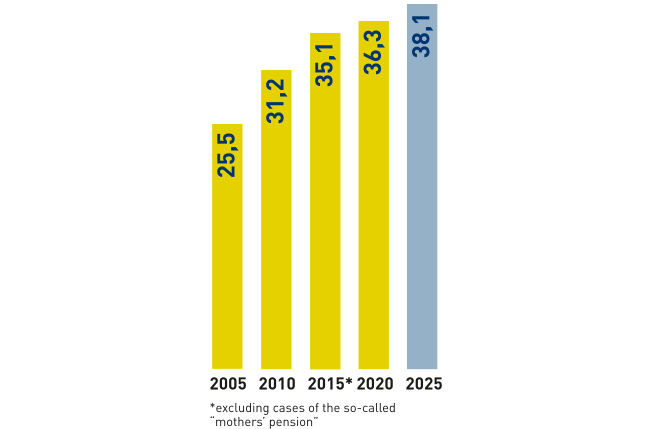
The number of years of insurance for women has risen markedly in recent years. In 2005, women had been paying insurance contributions for an average of 25.5 years when they started drawing their pension. In 2025 that figure had risen to 38.1 years. One important reason for this increase is that more women in the western German states are in employment, although female employment in the eastern German states is still much higher. The phase-out of the option for women to start drawing an old-age pension from the age of 60 is another contributory factor, as is the extension of child-rearing credit periods with the so-called “mothers’ pension” and the higher eligibility ages.
Higher average age of rehabilitation patients
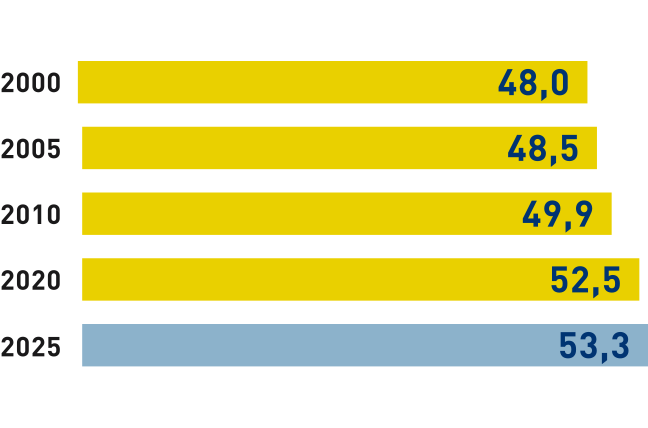
The average age of inpatient and outpatient medical rehabilitation service recipients has risen since the turn of the millennium. A key reason for this increase is demographic change and the raising of the age at which people are eligible to claim old-age pension.
Number of insured persons at an all-time high
The number of persons subject to compulsory insurance contributions and not receiving a pension hit a new high of 34 million at the end of 2024. This corresponds to an increase of 0.1 per cent versus the previous year.
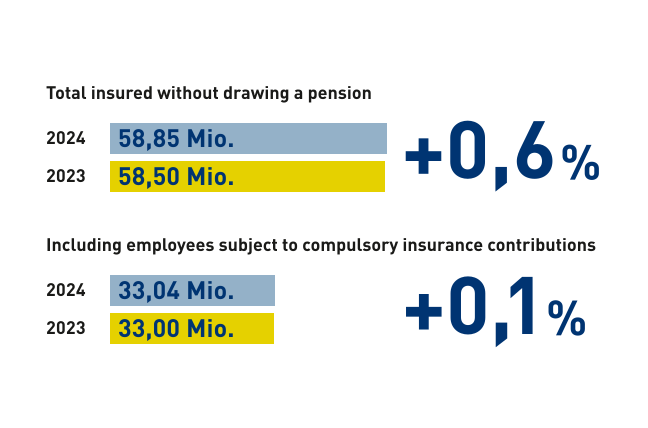
Credits: Statistics of the German Pension Insurance – insured persons 2024 and 2023
Further information
Further figures and statistics can be found at www.statistik-rente.de
